
Animation in Architecture
3D animations and animated architectural visualizations
Animations expand upon traditional architectural visualization by incorporating time, movement, and sequence. While static images show individual perspectives, 3D animations enable a coherent representation of space, use, and development. Architecture is not merely shown, but made tangible step by step—as a spatial sequence, a process, or a carefully crafted presentation. Architectural animations are particularly well-suited for presentations, competitions, marketing, and social media. They capture attention, convey content clearly, and make complex projects easy to understand. At loomn, animations always stem from the question: What is to be conveyed—atmosphere, spatial impact, process, or idea?


Architectural films for project presentations
3D animations are among the most effective forms of architectural presentation. Through carefully choreographed camera movements, lighting effects, and spatial sequences, they create a clear impression of the project. Buildings, interiors, and outdoor spaces are shown as a cohesive whole rather than fragmented into individual images. Architectural animations are ideal for architects, developers, and project managers who want to present their projects in a high-quality and understandable way—whether in competitions, for marketing, or on project websites.
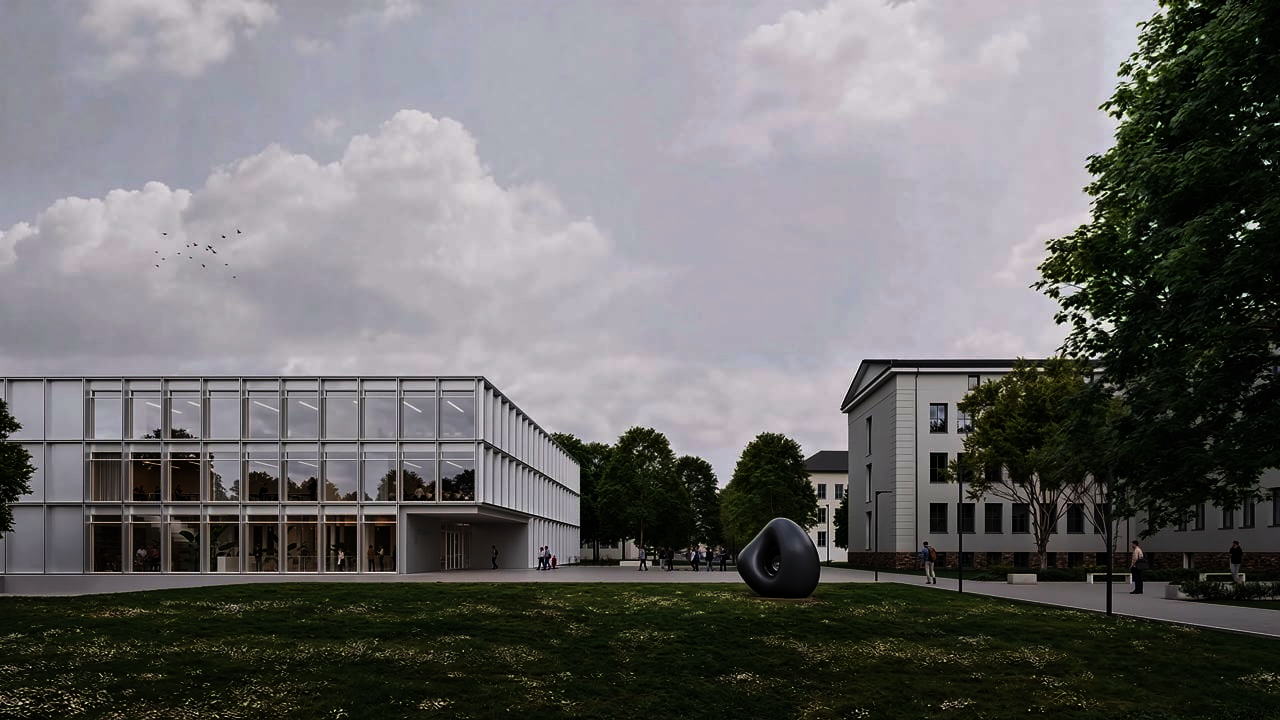
Project example: Architectural animation: Breitfeld Primary School, Emil Grünbär - :mlzd

Real-time simulations and experimental architecture
Animation can go beyond traditional 3D renderings and create new ways of presenting architecture. Real-time animations based on game engines or visualizations within point clouds enable dynamic and, in some cases, interactive spaces. Architecture is not merely displayed but reinterpreted. This type of presentation is particularly well-suited for exhibitions, artistic projects, or experimental formats where atmosphere, perception, and spatial impact take center stage.
Project example: Real-time Animation: From Dust to Light – Azra Akšamija

3D Sequences in Architectural Models – Minimalist Aesthetics, Maximum Impact
Not every animation has to be photorealistic. Reduced or abstract representations, in particular, can help communicate architectural ideas more clearly. Model-making aesthetics, simple materials, or graphic approaches deliberately direct the focus toward concept, space, and atmosphere without defining every detail conclusively.
This type of architectural animation is especially suited to competitions, early design phases, or conceptual presentations. Through the use of reduced materials, carefully controlled lighting, and calm camera movements, the architecture is presented in a precise yet atmospheric way.
Project example: Abstract Animation: Filderklinikum - Arcass Architects

Animated explanation of processes and details
A particular advantage of an explainer animation lies in its ability to convey complex content. Technical processes, constructions, or components can be presented step by step as a process animation. This creates explainer films that make relationships visible which are difficult to understand in static images. Especially in the case of façade structures, material layers, or technical details, animation becomes a precise tool for architectural communication.
Project example: Detailed simulation: operational training centers - Goldbeck
AI animations – New possibilities for atmosphere and movement
Artificial intelligence is opening up new ways to develop animations faster and with greater flexibility. Still images can be brought to life, moods can be altered, or sequences can be further developed based on existing renderings. Especially in early concept phases or for atmospheric presentations, this creates new opportunities to communicate architecture in an emotional and efficient way. AI-generated animations are particularly well suited for stylized sequences, rapid design variations, or social media formats. At the same time, practical experience shows that architectural precision, spatial consistency, and controlled camera movements still require
→ Learn more at AI in architectural visualization
Digital short sequences for social media and digital communication
Moving images are one of the most important forms of digital communication. Short animations can be used specifically for social media, websites, or presentations. They attract attention, convey content quickly, and can be flexibly adapted to different platforms. For architects, property developers, and marketing departments, this creates formats that make projects visible and significantly increase reach.
What are the advantages of turnkey implementation from a single source?
Concept, modeling, animation, and final output are conceived together. This creates a consistent visual language, reduces coordination efforts, and enables projects to be implemented efficiently. Animation can be directly combined with visualization, film, web, or other media. For our clients, this means having a single point of contact for the entire visual production process.
How does loomn work in the field of animation?
We do not develop animations as a standard product, but rather as a tailored solution. Together with our clients, we define the objectives, content, and style of the scenarios. Building upon this foundation, we create 3D animations, explainer videos, or experimental formats that are precisely aligned with the specific project. In doing so, we draw upon a diverse range of technologies—from classic 3D animation and real-time workflows to AI-driven methods.